Message
Reflections on Being Named an Honorary Fellow of the AIA
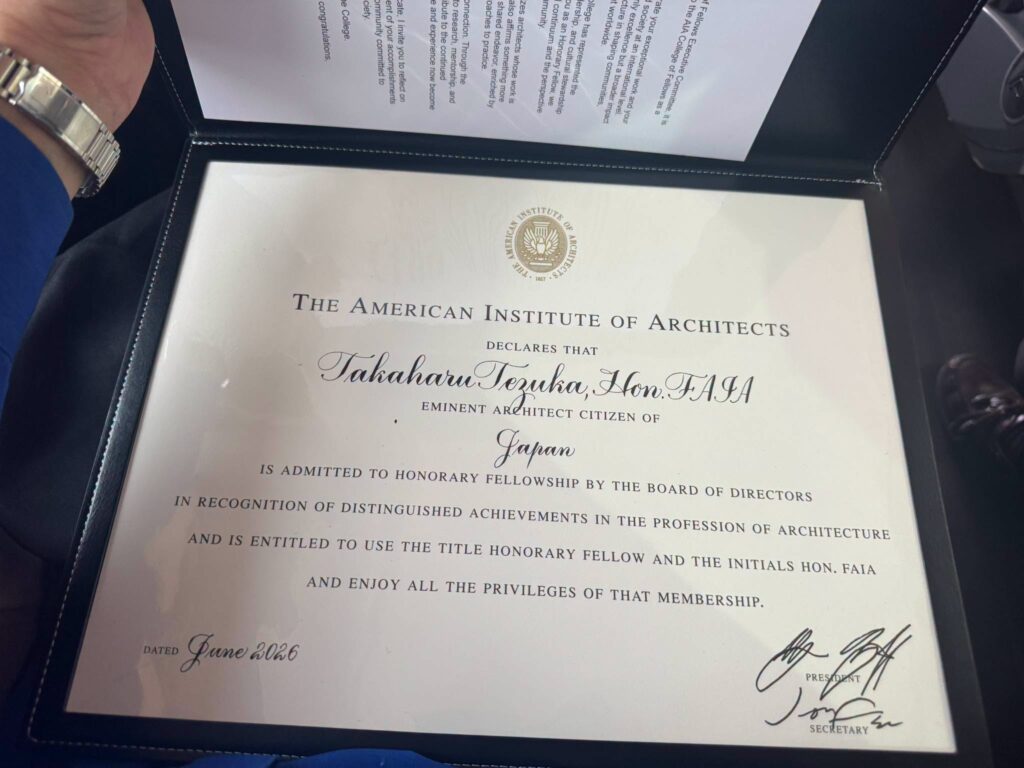
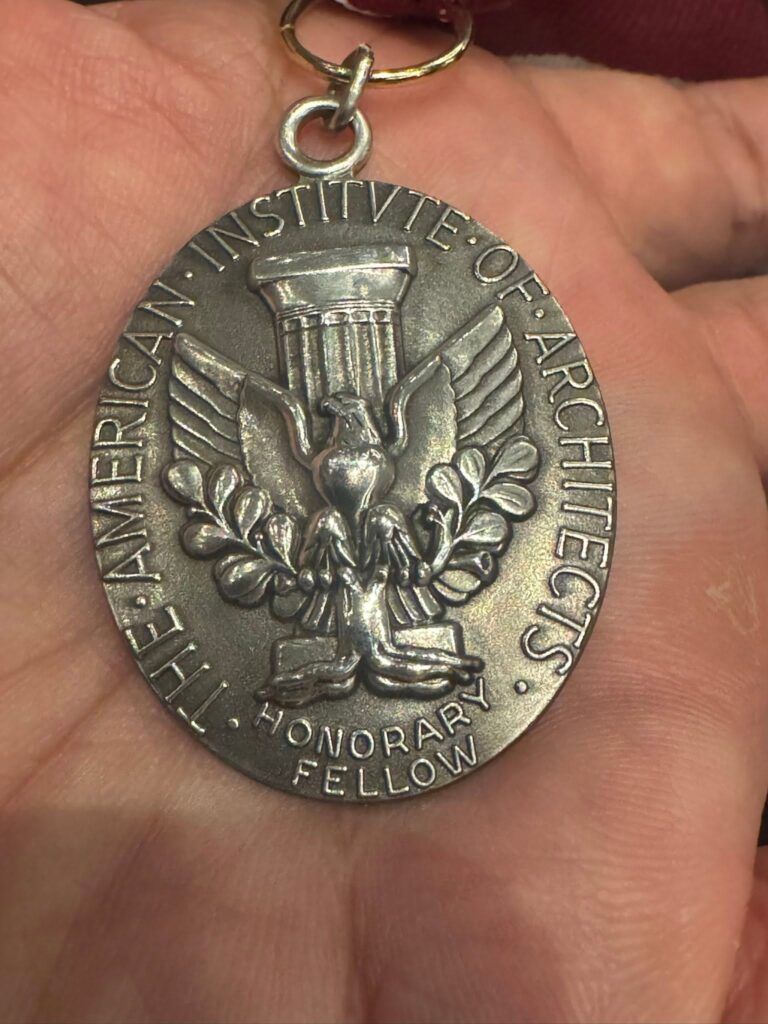
2026/6/16I am deeply honored to have been named an Honorary Fellow of the American Institute of Architects (Hon. FAIA).
Founded in 1857, the American Institute of Architects is one of the world’s most influential professional organizations for architects. Within the AIA, the College of Fellows recognizes architects whose work has made a significant contribution to architecture and society. Honorary Fellowship extends this recognition to architects practicing outside the United States whose work has had an international impact on the advancement of architecture and the built environment.
The AIA maintains both Honorary Membership and Honorary Fellowship programs. While both recognize distinguished contributions to architecture and architectural culture, they serve different purposes and reflect different traditions within the Institute. Honorary Fellowship is conferred through the College of Fellows and is intended for architects practicing outside the United States whose body of work has contributed meaningfully to the international discourse of architecture.
One of the unique aspects of Honorary Fellowship is that it cannot be applied for directly. Candidates are identified and considered through a process conducted by the College of Fellows, and the deliberations themselves remain confidential. For this reason, I regard this recognition not as a prize awarded for a particular project, but as an acknowledgment of a lifetime of work, learning, teaching, and collaboration.
Among those who have previously received this distinction are some of the most influential architects of our time, including Sir Norman Foster, Lord Richard Rogers, Toyo Ito, Kazuyo Sejima, Ryue Nishizawa, Shigeru Ban, Riken Yamamoto, and, more recently, Junya Ishigami. Their presence reflects the role of Honorary Fellowship in recognizing architects whose work has expanded the cultural horizons of architecture across generations and national boundaries.
I accept this honor with profound gratitude and humility. Whatever achievements may be associated with my name are the result of the guidance, encouragement, and generosity of many people throughout my life.
My years at Musashi Institute of Technology, now Tokyo City University, provided the foundation of my architectural education. My studies at the University of Pennsylvania broadened my understanding of architecture as an international and cultural endeavor. These experiences have profoundly shaped the way I think about architecture, education, and society.
I am particularly grateful to my teachers. I owe a special debt of gratitude to Professor Mohsen Mostafavi, whose guidance at the University of Pennsylvania and whose friendship and encouragement over many years have had a lasting influence on my life and work. I am equally indebted to Professor Chiaki Arai, Professor Emeritus of Tokyo City University, who provided the foundation of my architectural education in Japan and whose influence continues to inspire me today.
I would also like to express my heartfelt appreciation to the many colleagues, students, clients, community members, and friends with whom I have had the privilege of working over the years. Architecture is never the work of a single individual. It emerges through dialogue, trust, and shared aspirations. Above all, I wish to thank my family, whose support and understanding have sustained me throughout this journey.
I therefore accept this recognition not as a personal achievement, but as a reflection of the many relationships that have shaped my life and career. If architecture has taught me anything, it is that our greatest work is not the buildings we leave behind, but the connections we create between people, nature, and society.
As I look toward the future, I hope to continue contributing through both architecture and education, and to pass on to younger generations the knowledge, values, and generosity that I have received from those who guided me. In doing so, I believe I can best honor the trust and encouragement represented by this distinction.
Takaharu Tezuka